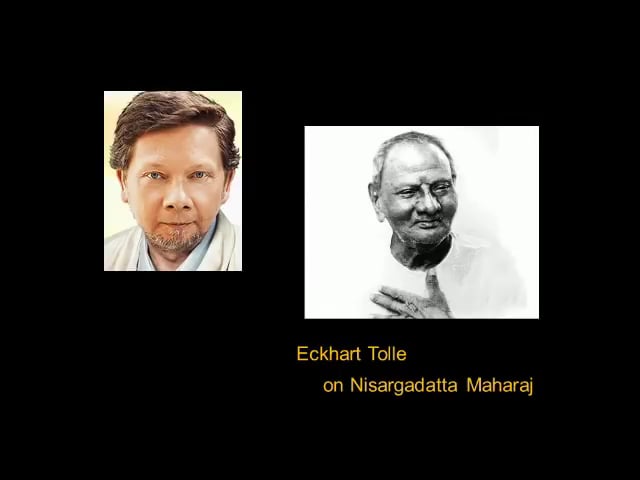
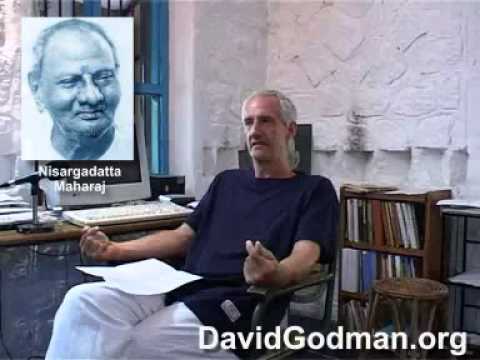
In this short four minute video we hear Eckhart explaining that “Realization” can come in an instant but that many times it can come over time. He then goes on to tell a short version of the story of Nisargadatta Maharaj (I Am That). Lets listen in…
This short five minute, well produced video from “Universal Awakening” brings us beautiful quotes about God from such Masters as Mooji, Ramana Maharshi, Alan Watts, Nisargadatta Maharaj and many others. Here we find a central theme that attempts to define the meaning of God expressed in many ways, but resulting in only one common message.
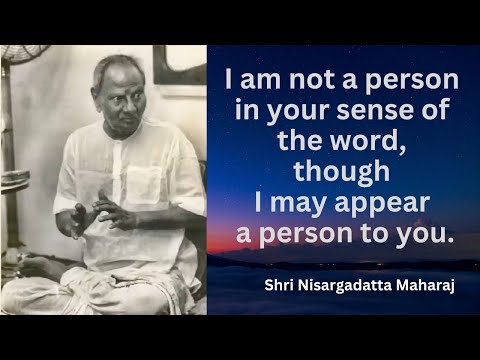
Here you will find a well produced four minute video of quotes and wisdom from Nisargadatta Maharaj, one of the greatest modern day masters and Jnani.
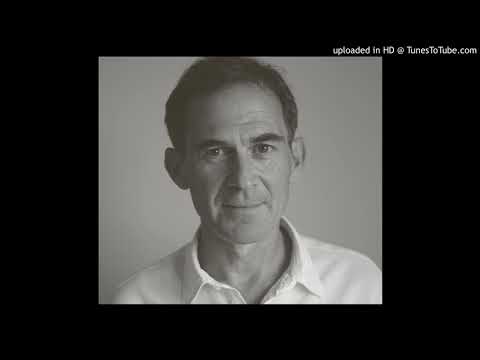
In this six minute audio from Rupert Spira, he gives us the no frills, bottom line of how the seemingly separate self begins and ultimately comes full circle back to find the true “Self”, which has always been in full view and simply overlooked.
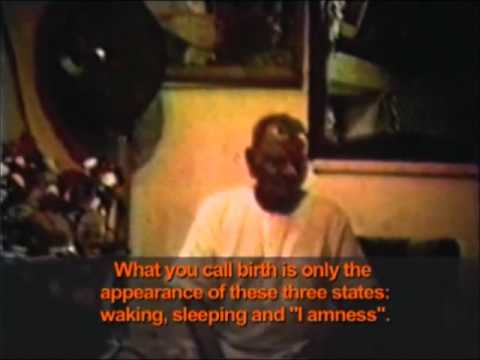
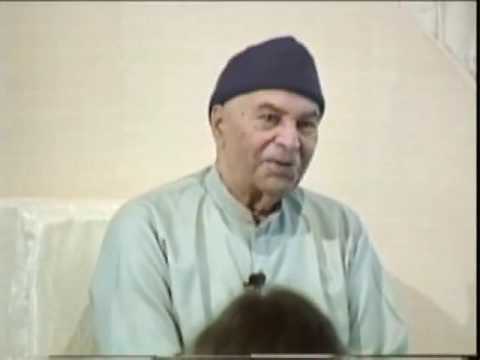
In this silent, yet revealing video of a conversation describing his true nature, Nisargadatta responds to questions about “himself” and his relationship to the apparent world around him.
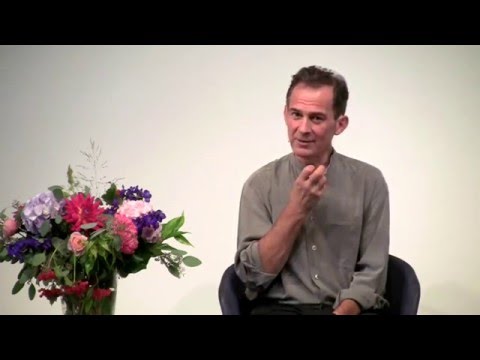
In this 10 minute video from Rupert, a questioner wants to know what role sexuality can play in becoming more aware and also what role this strong energy plays after the realization of our true nature. Rupert explains that it should not be used as a tool for the realization of the “truth” and that the major difference after realization is that this energy is no longer controlled by the neurotic demand of the separate self. See how Rupert explains it…
In this 6 minute video, Rupert takes us on an intimate look at the true nature of our reality and what we truly are. Since the word “Awareness” can mean different things to different people, Rupert uses the word “Experiencing” to drive home the message.
In this 11 minute video, Rupert goes into a fairly detailed description of how our feelings are created and how we can use this knowledge to dismantle the feelings into nothingness.
This video from Jac may only be two and a half minutes long, but the truth it points to is immeasurable. Jac helps us to realize that regardless of one’s idea of enlightenment, the reality is that there is no such thing as enlightenment.
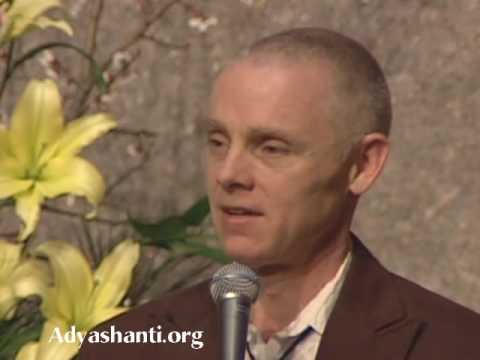
In this short 4 minute video, Adyashanti explains that we can not put conditions on our search for “Truth” if we really want to get to the truth. Placing conditions confines the possibilities to fit only in our narrow view of what is possibly true, but perhaps the truth does not fit within the confines of those conditions at all. See what Adyashanti has to say…
Sri Nisargadatta Maharaj, a sage of the highest order, a tremendously gifted teacher who spoke directly from Absolute “pure Awareness, unborn Reality,” and thus from real spiritual authority. This is Part 1 of a five part split from rare video that was recorded circa 1979 of a Satsang in the apartment of Nisargadatta Maharaj in Mumbai where he would invite strangers into his home and discuss enlightenment with them. This video was not known to exist until January 2007 when Mulappartan, one of the original translators of Nisargadatta Maharaj released an old VHS tape containing this historical Satsang. For Part
[More]
In this nine minute video, Neale (author of “Conversations with God”) shares his understanding of fear and then shares how to deal with and ultimately transcend fear altogether.
In this short 10 minute video of a discussion between Rupert Spira and Deepak Chopra, we find them discussing the subject of Rupert’s new book called, “The Nature of Consciousness”. To find out more about Rupert’s book, click here.
In this 10 minute video from Rupert, he uses two metaphors to answer two of the most common questions about our search for “Enlightenment”. Using the metaphor of John Smith to represent “Awareness” and King Lear to represent the person we believe ourselves to be, he very logically explains why ignorance of our true nature causes all of our suffering and who/what is it that keeps us seeking for happiness.
This short 4 minute video from Jeff Foster is a beautiful reminder that we are not our thoughts about ourselves and that we are like a mirror which only reflects the beauty and perfection which is always emanating out of “Source”.
This 10 minute clip takes a closer look at the non-reality of the ego (person-hood) and the role that it can play in our lives. Alan Wilson Watts (6 January 1915 – 16 November 1973) was a British-born philosopher, writer, and speaker, best known as an interpreter and populariser of Eastern philosophy for a Western audience.
In this super short 3 minute video, Rupert responds to someone that is confused about what is real and what is not real, and in the process gives us a completely different perspective or meaning of “Individuality” itself.
In this amazing 9 minute spontaneous video from Jac, she explains that there are some persistent thoughts can just be dismissed, but there are also persistent thoughts that need to be dealt with. In this clearly expressed video, Jac explains the way to deal with these endlessly persisting thoughts.
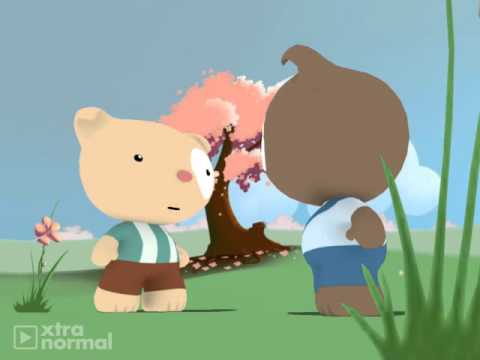
In this cute five minute animation we find Frick and Frack discussing the question, “What is my true nature?” The beauty of using this format to convey this message is that it allows us to focus on the MESSAGE rather than the MESSENGER. Let’s listen in on there little conversation… This is Part 1 of this discussion of our true nature between Frick and Frack. Here are the links to the other parts of this series: Part 1 – The Nature of Reality Part 2 – Individuality & Conditioning Part 3 – Personality After Realization Part 4 – Free Will
[More]
In this 12 minute video from Rupert, he takes us through the process from the pre-egoic state at birth, all the way to post-egoic realization. Beginning with a question from the audience about how we should teach our children about the nature of reality, Rupert shows us the process of forming an ego and its eventual dissolution. He then replies to the question on how to best guide our children in such matters.
This wonderful 10 minute video is the reading of a beautiful poem from Papaji as performed by Satyashanti. This poem, Self, comes from the book, The Truth Is, a collection of poems and conversations with H.W.L. Poonja, also affectionately known as Papaji. This poem contains all that needs to be known for Awakening to the one and only “Self”.
In this 9 minute video, Rupert responds to a question about perceiving. Because of the mind’s ability to wear the mask of being the perceive, one can get confused and feel like perhaps there is a perceive that can be perceived. Rupert uses his wonderful teaching method to help remove the confusion.
In this 10 minute video from Rupert, he explains that at the source we are all the same but that our objective experience is different. That is why your thoughts are not my thoughts, but by understanding our true nature, we can always try to meet the “other” from the same source of our being.
This 10 minute clip is part 2 of a 4 part interview with Rupert Spira which focuses on investigating whether Consciousness can be personal or not. In other words, is there “my” consciousness and “your” consciousness? Although this clip can stand on its own, there are three more parts to this interview. To view them click on the following links: Part 1 – The First Fundamental Illusion Part 3 – Exploring the Apparent Conflict Within Part 4 – Consciousness is the Nature of Experience
In this eye opening 6 minute message from Alan Watts, he exposes the ridiculous belief in a “Game of Life” that has been designed to keep society moving in an orderly and business like fashion.
In this 11 minute audio from Alan Watts, he shares his message that if we practice religion in order to try to get something out of it, we are truly wasting our time. He goes on to explain how religion can become a way to celebrate life and is really about the pure enjoyment of it.
In this 5 minute video, Adyashanti speaks on the importance of letting go of resistance as one of the keys to freedom.
This 6 minute video from Rupert Spira seems innocent enough at first, but upon review it reveals a massive truth explaining where the saying “Using a Thorn to Remove a Thorn” came from and what it means.