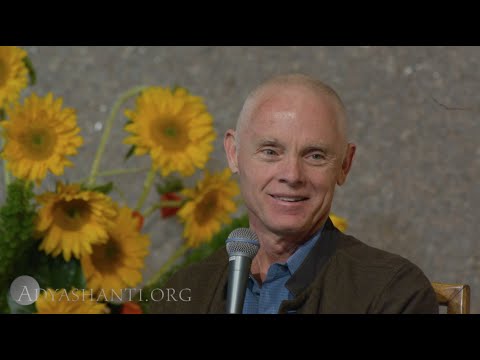
Here is a wonderful 5 minute guided meditation from Adyashanti called “The Vast Space”. In this guided meditation, Adyashanti leads you below your thoughts into the quieter dimension of being and the best thing is all you need is 5 minutes.
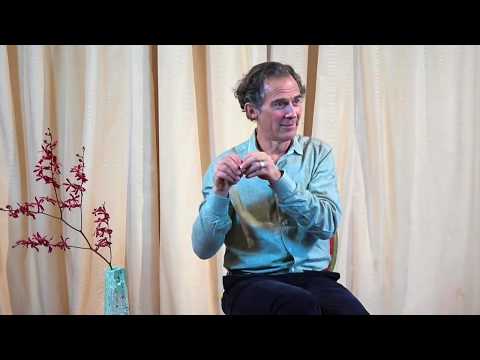
In this seven minute video, Rupert Spira helps a questioner understand that in the early stages of development, it is nature’s way to develop a strong egoic self-image. He goes on to say that for most humans the problem arises when this is where the development stops. Spirituality is about transcending our identification with this egoic self-image to the realization that our true essence is beyond this false sense of self. Let’s listen…
In this inspiring 6 minute video, Nada helps us understand what gratitude really means, and how to be grateful, because gratitude has the power to change your life from one of dissatisfaction to one of happiness, joy and contentment. Let’s join in…
In this lovely 5 minute video, Gangaji reminds us that once the “Truth” has been realized, the mind will forever try to sneak back in. That’s why the masters like Nisargadatta Maharaj, Papaji and Ramana Maharshi all said that we must remain earnest and vigilant. Let’s listen as she reveals the one and only effortless clue we need to signal our attention that we have reactivated our identity as a person…
In this 7 minute excerpt (from a joint-Satsang from Roger Castillo and Gautam Sachdeva), Roger emphasises the importance of earnestly asking oneself: “What am I truly seeking?” and touches upon Ramesh Balsekar’s (his master) wisdom to help direct the seeker toward a life of peace and love.
In this wonderful little 5 minute video, Nada helps us understand that in our everyday activities, most of us are operating “automatically” based on past conditioning (programming). Nada explains that with enough CONSCIOUS effort we can reprogram any part of our conditioning and create a much different experience of life. Let’s listen…
In this lovely 5 minute video, Adyashanti explains that the world of experience has a very powerful magnetic attraction but that we must learn to let life be, let what happens… happen, and find out what remains. This is one way to experience our true nature…
In this very wise video, Nada offers some intelligent insight into overcoming security and letting go of romantic relationships. Nada uses a personal experience demonstrating issues with personal insecurity and how it can manifest in the form of romantic attachment, while also offering some insight into how we can become more secure in ourselves and our relationships.
In this very enlightening 10 minute video, Rupert Spira demonstrates that the now is not moving through time as it appears to our mind. In reality, not only is there no past or future but there is also no such thing as a now which is a moment in time. Let’s see what Rupert is talking about…
In this great 13 minute video from Rupert, a woman says that she has a different experience when she is in her finite mind than when in pure knowing, and asks for help in understanding how they are the same. Let’s listen to Rupert’s wise response…
In this 5 minute treasure, a man asks how to live with trust in life rather than resistance to it. Rupert explains that the most important thing is where does resistance come from. Let’s listen to this intelligent and wisdom filled response…
This question in this revealing 11 minute video was initially posed by Adyashanti, who teaches from the perspective of non-duality. When we interact with others… even when we simply think of others.. are we coming from a sense of separateness or a sense of connectedness? Let’s find out what Nada has to say…
This video of Nisargadatta Maharaj reveals the entire core or heart of what is known as the “Truth”. Nothing other than this needs to be known or revealed. Nothing has to be done. Blessed be the Master! This video used to be two parts but now this video includes both parts.
In this video, Adyashanti spends around 9 minutes getting us to take a look at what we believe our “self” to be. In this video, the “self” he is speaking off is the “me” the daily “I” (the person or personality) that almost all people see themselves to be. Upon closer examination, we find that perhaps we are not who we have always believed ourselves to be.
In this 5 minute video, Adyashanti speaks on the importance of letting go of resistance as one of the keys to freedom.
In this 8 minute video, Jeff Foster takes a comical look at the search for “Enlightenment” and “Living in the Moment” to show that the reason it seems so hard is because we are looking for something that we already are and a moment which already is.
In this 12 minute video from Rupert, he takes us through the process from the pre-egoic state at birth, all the way to post-egoic realization. Beginning with a question from the audience about how we should teach our children about the nature of reality, Rupert shows us the process of forming an ego and its eventual dissolution. He then replies to the question on how to best guide our children in such matters.
In this 10 minute video from Rupert, a questioner wants to know what role sexuality can play in becoming more aware and also what role this strong energy plays after the realization of our true nature. Rupert explains that it should not be used as a tool for the realization of the “truth” and that the major difference after realization is that this energy is no longer controlled by the neurotic demand of the separate self. See how Rupert explains it…
In this lovely seven minute video from Adyashanti, he explains that “Reality is the ultimate bait-and-switch maneuver. It costs nothing to wake up, however it costs everything to stay awake.” “To be really awakened is to have no more argument with yourself, no more argument with the world, no more argument with others, and no more argument with God.” Let’s listen in on Adyashanti as he explains…
In thirteen minutes, this well edited compilation offers the wisdom of three modern day spiritual teachers (Gurus) on the subject of suffering, how suffering is created and what we can do about it. Let’s listen in …. Copyright Disclaimer Under Section 107 of the Copyright Act 1976, allowance is made for “fair use” for purposes such as criticism, comment, news reporting, teaching, scholarship, and research. Fair use is a use permitted by copyright statute that might otherwise be infringing. Non-profit, educational or personal use tips the balance in favor of fair use. All copyrighted materials contained herein belong to their
[More]
In this cute three minute animation we find Frick and Frack discussing the fact that realization of our true nature does NOT mean the end of the personal role (character) we are playing. The greatest advantage to these cartoons is that it allows us to focus more on the MESSAGE, rather than the credibility or character of the messenger. This is Part 3 of this discussion of our true nature between Frick and Frack. Here are the links to the other parts of this series: Part 1 – The Nature of Reality Part 2 – Individuality & Conditioning Part 3
[More]
In this six minute video, Papaji tells the story of a king who falls asleep and dreams that he is a beggar. He uses this analogy to teach us that when we are awake to the senses we fall asleep to our True Nature.
This AMAZING eight minute video will change your view of love and attachment forever. Nada explains that most humans have a misunderstanding of love and attachment and that one has absolutely nothing to do with the other. He then demonstrates how we can love without the destructive effects of attachment. Let’s get started… Click here for more Nada videos.
In this quick 3 minute audio, Adyashanti explains that when we finally see EVERYTHING as God, we are seeing life from an enlightened perspective. What does it mean to live the enlightened perspective? Adyashanti explores manifesting it and bringing it forth in your daily life. Let’s listen…
In this short six minute audio, Adyashanti explains that although we definitely don’t want to remain as the ego for a sense of identity, you needn’t go into battle with the ego, nor indulge it, and instead utilize it as a useful function of life. Let’s find out what he means…
In this great little video from J. Krishnamurti, he responds to the question, “Is it possible to know yourself when you are not related to anybody?” Let’s listen as we discover that we are never alone…
In this EXCELLENT 15 minute audio, Gangaji talks about the fact that most people have some expectation or image of what Enlightenment (Awakening, Realization) should look like, or feel like, in addition to all the “benefits” we expect to get out of “reaching” that “state”. This in turn is one of the most popular reason for never being able to obtain that lofty goal. In this audio, Gangaji offers true wisdom on overcoming these expectations…
In this 7 minute video, Nada explains that in order to love ourselves, it’s important to embrace the time we have alone, so we can know ourselves more intimately, to discover our intrinsic value and to heal our wounds. Let’s listen to this brilliant wisdom… Click here for more Nada videos.