Gautam Sachdeva speaks and writes on the subject of Advaita (non-duality). He writes with a specific focus on peace of mind in daily living. He spent over nine years in close association with renowned Advaita sage Ramesh Balsekar, assisting him with the editing and publishing of some of his books.
In this lovely 7 minute clip, from a meeting that took place a few days after Papaji’s death, Gangaji shares the last teaching that he gave from his deathbed. Fiercely, furiously, he asked each one of his devotees in the room, this very essential question that is really the root of all his teaching. “Where is the Buddha?” Let’s find out the significance of this teaching…
In this very informative 6 minute video, Jeff Foster explains the difference between thinking ABOUT our feelings (in the time-bound mind) and being truly PRESENT with sensations in the body, in the aliveness and safety of the present moment…
In this five minute video clip, Jac explains that there is no need to try to change our thoughts and it is perfectly ok to feel thoughts of stress or struggle as long as we don’t believe in those thoughts. In other words we can be totally free and awake AND life on the outside can continue as usual (based on our conditioning), as long as we don’t identify or believe in what is happening as anything other than phenomenal.
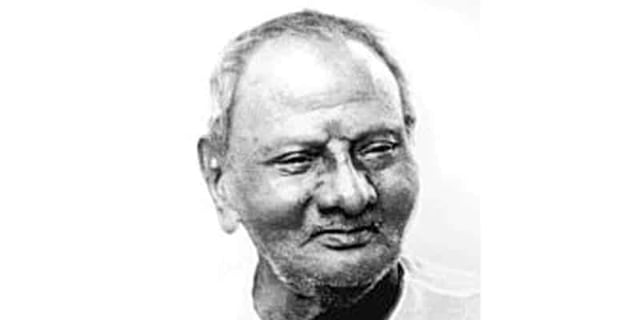
Here is a well produced 13 minute biography of Nisargadatta Maharaj. Sri Nisargadatta Maharaj (April 17, 1897 – September 8, 1981) was an Indian Spiritual Teacher and philosopher of Advaita. His book, I Am That – summarises his Advaita philosophy through the many talks with devotees, here is his story…
This lovely 10 minute audio bring to us an introduction to Jnani and Non-Dual Master Nisargadatta Maharaj featuring outstanding quotes from the book, “I Am That”.
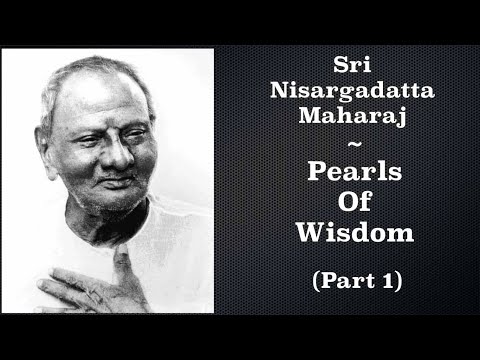
In this 2 minute video, we find 20 quotes from Nisargadatta Maharaj which points to his core teachings. Nothing is needed other than the simple truths revealed in these quotes to reach the highest knowledge and understanding of who we truly are. You may need to keep the “pause” button handy as some of these quotes change a bit too fast
In this 14 minute video narrated by Vasundhara, we find quotes from conversations with Nisargadatta Maharaj. This particular one is focused around what happens after Realization. Let’s sit back quietly and enjoy…
In this twelve minute video, quotes are read from the book “I Am That” transcribed from talks by Nisargadatta Maharaj. Sri Nisargadatta Maharaj, a sage of the highest order, is a tremendously gifted teacher who spoke directly from the Absolute “pure Awareness, unborn Reality,” and thus from real spiritual authority.
In this 7 minute video , we find quotes from conversations with Nisargadatta Maharaj. This particular one is focused around material from “I Am That”. Let’s sit back quietly and enjoy…
What does it mean to be self-aware, and how can we cultivate greater self-awareness? This excellent 13 minute video, Nada explains how we can consciously develop greater self-awareness from day to day. Let’s listen to his wise advice…
This well produced 9 minute video from “Universal Awakening” brings us a beautiful compilation of many of today’s pertinent spiritual teachers providing insights from those who have explored the depths of their being, and invites you to take the step towards a life of wholeness.
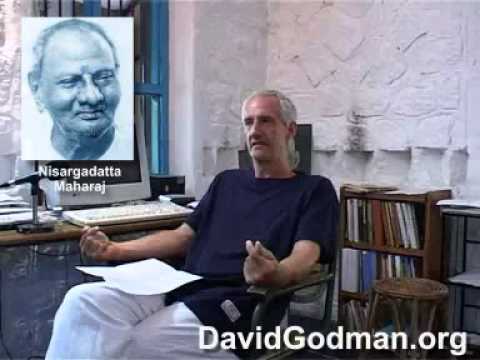
Here’s a great little five minute video featuring David Godman who shares some personal experiences with Nisargadatta Maharaj, which includes the backbone of Nisargadatta Maharaj’s teachings. Sri Nisargadatta Maharaj was an Indian spiritual teacher and philosopher of Advaita (Nondualism), and a Guru, belonging to the Navnath Sampradaya. Sri Nisargadatta, with his direct and minimalistic explanation of non-dualism, is considered the most famous teacher of Advaita since Ramana Maharshi.
This is a fantastic eleven minute guided meditation using the words and teachings of Jnani and Non-Dual Master Nisargadatta Maharaj featuring outstanding quotes from the book, “I Am That”. Let’s clear all distractions and enjoy…
In this great little interview of Ramesh Balsekar by Stephen Wolinsky, they discuss the relationship between Ramesh and Nisargadatta Maharaj and what he believes was the central message of his teachings. Ramesh Balsekar and Stephen Wolinsky are both disciples of the late Sri Nisargadatta Maharaj. Balsekar also became one of Maharaj’s favorite translators and did so for several years until Maharaj’s death and went on to write several books containing Maharaj’s teachings and discourses.
In this lovely 10 minute video filled with ancient wisdom, Gautam shares some quotes of Siddharameshwar Maharaj that impacted him deeply. Siddharameshwar Maharaj was Nisargadatta Maharaj’s Guru. Let’s get started…
In this lovely 13 minute video filled with ancient wisdom, Gautam shares some quotes of Siddharameshwar Maharaj that impacted him deeply. Siddharameshwar Maharaj was Nisargadatta Maharaj’s Guru. This is Part 4 of this series so let’s get started…
In this 11 minute video clip we find part two of a two part video where David Godman was asked about the difference between the teaching styles of Ramana Maharshi and Nisargadatta Maharaj. This was his response… FOR PART 1 GO TO: https://inspirationalvideosandquotes.com/hp_wordpress/?p=3196 David Godman is a well know author who has dedicated his life and written many books on the teachings of Ramana Maharshi, Papaji, and Nisargadatta Maharaj.
This short 5 minute video from Rupert Spira clearly demonstrates that in a world of duality (the physical world), the ego is not a mistake.
TO WATCH THIS VIDEO, SIMPLY CLICK ON THE TEXT “WATCH ON YOUTUBE” IN THE BLACK VIDEO PLAYER! In this short 6 minute video, Adyashanti reminds us that the “Self” can always be easily experienced in stillness. The brain is programmed to always be on the move trying to solve problems that most always don’t exist, but when we are able to let the brain do its thing and direct our focus to the stillness in which it appears, we find that the self is and has always present.
In this short video, Rupert explains how we view and interact with the world after “Awakening”. Where as before realization, we view the world as separate and how each interaction and activity can be of benefit to us, after realization our motives for interactions and activities become very different.
In this 6 minute video, Jeff expresses that the whole movement to “live in the now” as promoted by Eckhart Tolle and others turns “Living in Now” as a goal that we should strive for. He explains that this is mostly futile advice since in reality we ARE the now and we can be nothing other than now. Of course, the point he is missing is that “living in the now” is about directing our “Attention” to the now instead of letting our minds drift into daydreams of the past or future, but for the most part the principles he
[More]
CLICK ON THE TEXT THAT SAYS “WATCH ON YOUTUBE” TO VIEW THIS VIDEO. In this excellent 7 minute video from Adyashanti, he drives home the point that our mind is making up about 99% of all the experiences we have and then offers up the option that there is an alternative to the interpretive network of the mind—and invites us to experience this for ourselves.
In this 10 minute video from Rupert, he explains that at the source we are all the same but that our objective experience is different. That is why your thoughts are not my thoughts, but by understanding our true nature, we can always try to meet the “other” from the same source of our being.
In this seven minute video clip, Jeff offers wisdom which can help us deal with negative thoughts or thoughts of failure and unworthiness. The mere recognition that thoughts are like sounds which come and go helps defuse their reality so we can resist being drawn in to an emotionally charged story of self pity.
In this six minute video, Roger explains that the primary reason the majority of humans are on a constant search for happiness is because they have been conditioned with a misunderstanding of the meaning of happiness. Once a true understanding is established, one can stop looking for happiness in the flow of life and look within to find that it has been what we are all along.
In this great little five minute video, Adyashanti reminds us of the consequences of our attachments and how attachments are essentially the root cause of suffering.
In this eleven minute video, a seeker wants to know how having a non-dual understanding can affect our daily lives and how to deal with daily activities in a way that reflects that understanding. Rupert explains that a non-dual understanding can help to bring love to all situations but that we don’t need to purposefully make sure that our interactions are in line with our understanding as this will happen automatically. Let’s listen…