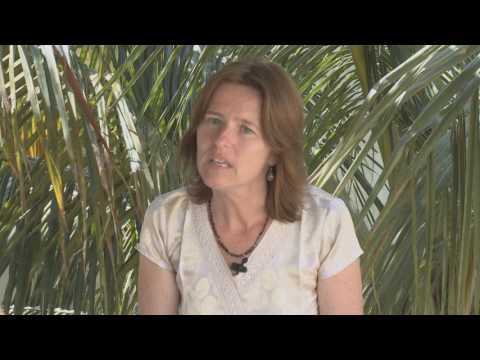
In this beautiful 5 minute video, a woman asks for guidance on discerning actions that come from our separate self vs. our highest understanding. She also asks if there is absolute truth.
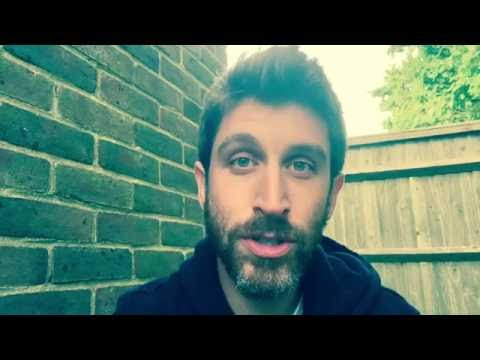
In this lovely 4 minute video, a man asks Rupert to recommend meditations or practices to further the deepening of his understanding. Let’s listen to Rupert’s suggestions…
In this inspirational 10 minute video, Roger points out that it is impossible for Awareness to NOT be present because Awareness is always aware of experience. Let’s listen carefully as Roger goes into more details…
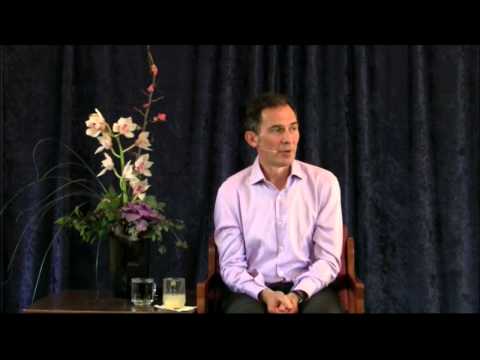
In this awesome 8 minute video with Rupert Spira, a man says that his experience of time feels unbearable. Rupert explains that when that which seems to be fixed and reliable is seen not to be, a sense of emptiness and fear can arise, and suggests that the man explore those feelings.
In this beautiful 6 minute video, Nada explains that there is a deeper level of understanding, beyond the intellect, beyond concepts and theories. And it is from that level of direct perception that we discover the wisdom and insight to let go of everything which disturbs us and find peace in the stillness.
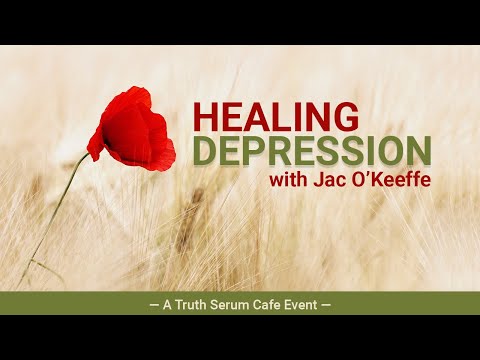
Twenty years ago Jac headed up a professional team who ran residential retreats for people with clinical depression. What they found was that depression was fundamentally rooted in the overuse of the self referencing network. In this important video, Jac talks about brain function, beliefs, emotions and experiences common to most people with depression and provides tips on what you can do.
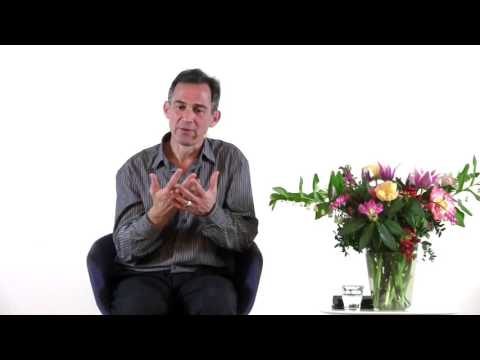
In this unique 11 minute video, a woman asks if she should continue to binge-watch Rupert‘s videos, and immerse herself in the teachings, or are they simply a distraction from being? Wondering what Rupert will respond to that? Let’s find out…
In this great six minute video with Rupert Spira, a man asks for clarification with respect to the mind and physical laws. Rupert suggests that there are habitual, repetitive and limited patterns of mind within consciousness.
In this very interesting 5 minute video, Non-duality teacher Richard Sylvester talks about the difference between our night time dreams and our daily “reality” to arrive at the conclusion that they are extremely similar other than that our daily “reality” is more consistent in nature.
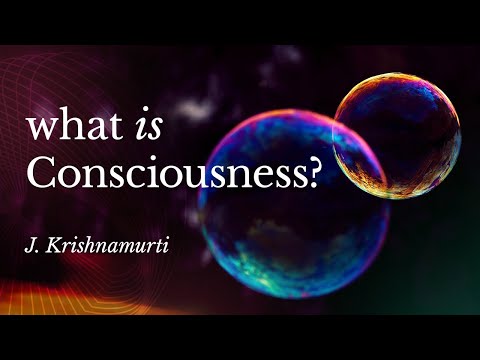
In this very short 2 minute clip, Krishnamurti explains that our consciousness, which means the way you think, the way you live, the way you believe, the way you react, your behavior, all that is your consciousness, which is your life. That consciousness is you. The content of that consciousness makes consciousness. Let’s listen…
In this inspired seven minute video, Jeff explains that often we make the mistake of thinking that we must do battle against all of our negative thoughts and feelings in order to get rid of them, when in reality healing is an ever-present awareness that embraces all thoughts and feelings. Let’s let Jeff explain…
In this very interesting 8 minute video, a man comments that it seems as though consciousness has a direction and that it desires evolution, let’s listen to Rupert’s intelligent response.
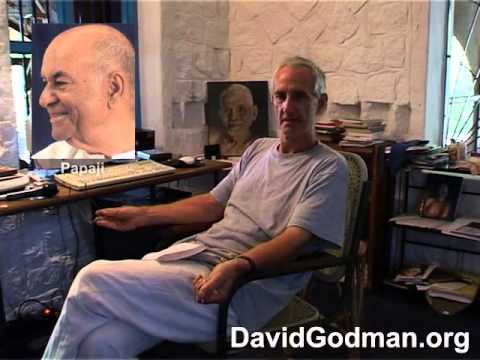
In this four minute excerpt from an interview with David Godman, (a well know author who has written many books on the teachings of Ramana Maharshi, Papaji, and Nisargadatta Maharaj) he gives us some insight into the life of Ramana Maharshi.
One of my favourite meditations to do are Mooji’s meditations. He was a guest on my “Under The Skin” podcast this week and here are some of the lessons I learned from him…
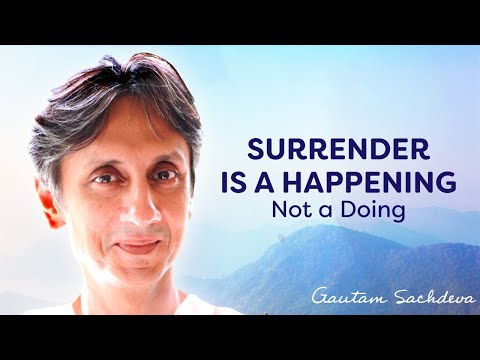
In this super short 3 minute video, Gautam Sachdeva reveals to us what Ramana Maharshi responded to the question, “What are the signs of a true Sage?” and goes on to explain why. Let’s listen…
This is part of a series of interviews I gave to a Russian film crew in my old house in Tiruvannamalai around 2003. In this particular segment I talk about how Papaji lived and taught in the 1970s and 80s, before he settled down in Lucknow and became more famous.
In this 7 minute video, Bob Thurman (a recognized worldwide authority on religion and spirituality, asian history, world philosophy, Buddhist science, and Indo-Tibetan Buddhism) shares his reflections on the meaning of Enlightenment. These reflections show the views of a scholar’s understanding and point of view based on knowledge passed down through the centuries.
Gautam Sachdeva speaks and writes on the subject of Advaita (non-duality). He writes with a specific focus on peace of mind in daily living. He spent over nine years in close association with renowned Advaita sage Ramesh Balsekar, assisting him with the editing and publishing of some of his books.
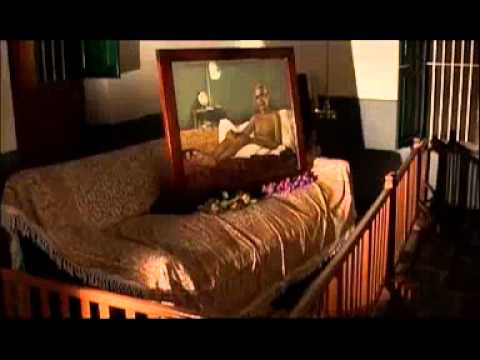
In this lovely 7 minute clip, from a meeting that took place a few days after Papaji’s death, Gangaji shares the last teaching that he gave from his deathbed. Fiercely, furiously, he asked each one of his devotees in the room, this very essential question that is really the root of all his teaching. “Where is the Buddha?” Let’s find out the significance of this teaching…
In this very informative 6 minute video, Jeff Foster explains the difference between thinking ABOUT our feelings (in the time-bound mind) and being truly PRESENT with sensations in the body, in the aliveness and safety of the present moment…
In this five minute video clip, Jac explains that there is no need to try to change our thoughts and it is perfectly ok to feel thoughts of stress or struggle as long as we don’t believe in those thoughts. In other words we can be totally free and awake AND life on the outside can continue as usual (based on our conditioning), as long as we don’t identify or believe in what is happening as anything other than phenomenal.
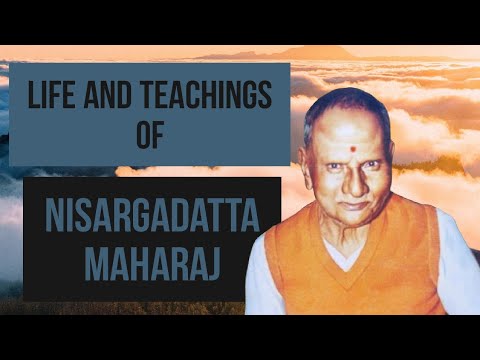
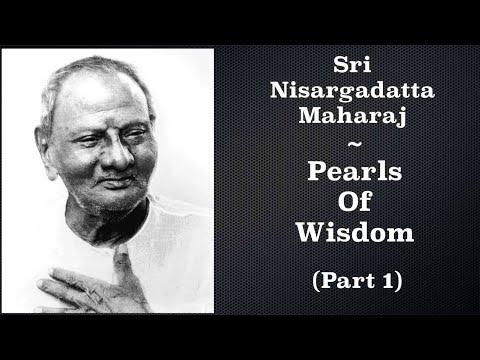
Here is a well produced 13 minute biography of Nisargadatta Maharaj. Sri Nisargadatta Maharaj (April 17, 1897 – September 8, 1981) was an Indian Spiritual Teacher and philosopher of Advaita. His book, I Am That – summarises his Advaita philosophy through the many talks with devotees, here is his story…
This lovely 10 minute audio bring to us an introduction to Jnani and Non-Dual Master Nisargadatta Maharaj featuring outstanding quotes from the book, “I Am That”.
In this 2 minute video, we find 20 quotes from Nisargadatta Maharaj which points to his core teachings. Nothing is needed other than the simple truths revealed in these quotes to reach the highest knowledge and understanding of who we truly are. You may need to keep the “pause” button handy as some of these quotes change a bit too fast
In this 14 minute video narrated by Vasundhara, we find quotes from conversations with Nisargadatta Maharaj. This particular one is focused around what happens after Realization. Let’s sit back quietly and enjoy…
In this twelve minute video, quotes are read from the book “I Am That” transcribed from talks by Nisargadatta Maharaj. Sri Nisargadatta Maharaj, a sage of the highest order, is a tremendously gifted teacher who spoke directly from the Absolute “pure Awareness, unborn Reality,” and thus from real spiritual authority.
These are a series of meditative quotes from Nisargadatta Maharaj on the I AM AWARENESS and BEYOND I AM.
In this 7 minute video , we find quotes from conversations with Nisargadatta Maharaj. This particular one is focused around material from “I Am That”. Let’s sit back quietly and enjoy…