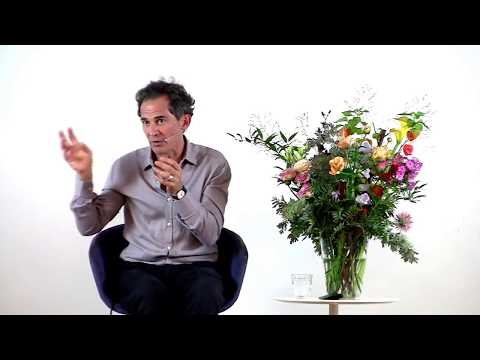
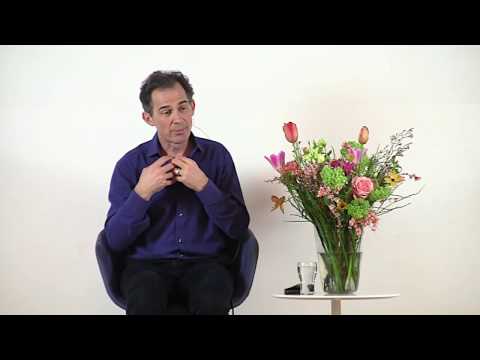
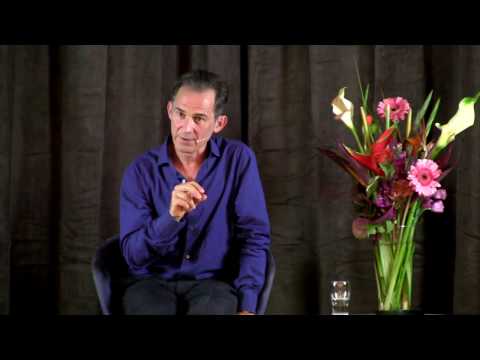
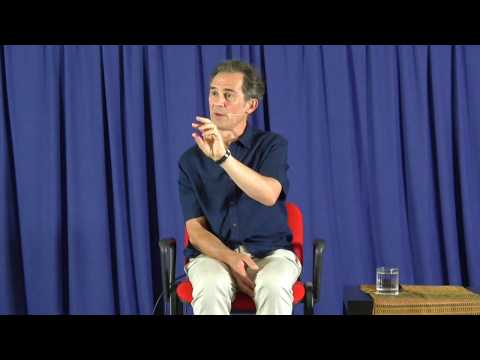
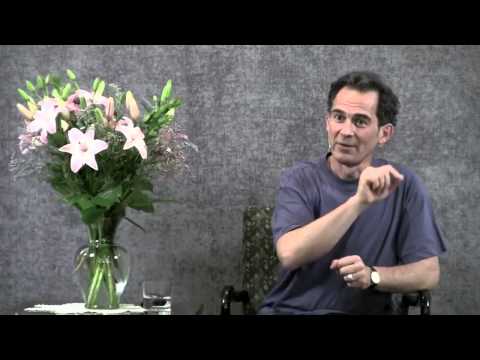
In this inspired 12 minute video, a man would like to know ‘who’ experiences the contraction of consciousness into a finite mind so Rupert uses a metaphor to explain how Consciousness is the only one that can experience anything at all.
In this AMAZING 13 minute video from Rupert, he explains that to get the best “experiential” awakening it is often best to use duality to awaken to non-duality. He goes on to explain that this approach is the only way to true Awakening because we don’t want to return to oneness as experienced by babies or animals, we want to return to oneness awakened to the true nature of reality.
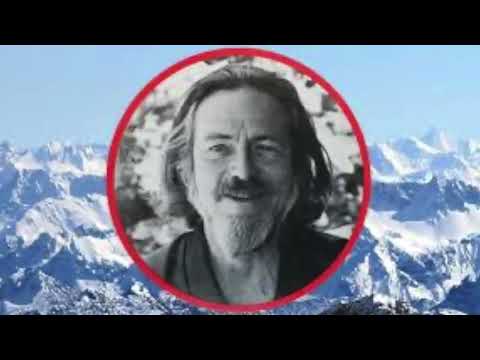
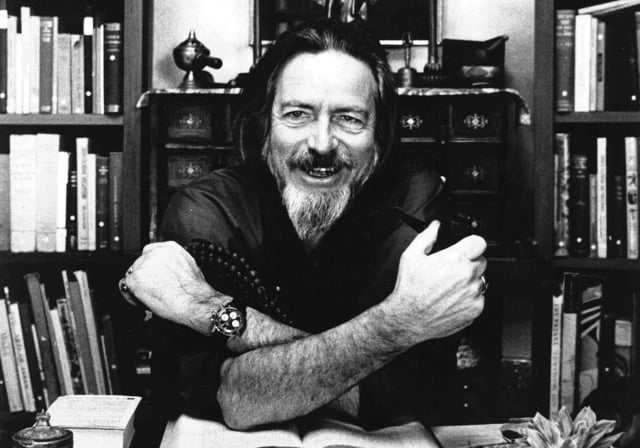
Here is a 49 minute clip from Alan Watts. In this clip he helps us to examine the motives behind the desire to improve ourselves to try to become a better. Alan has some interesting ideas about that. Let’s listen…
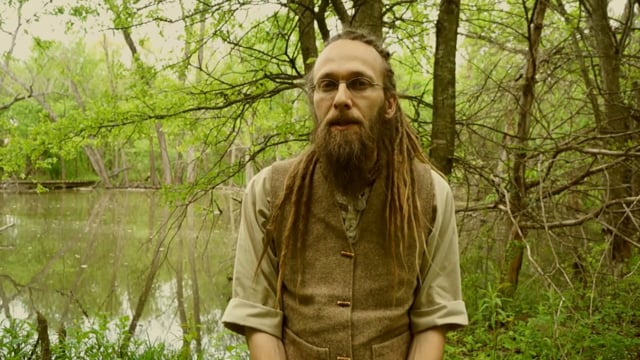
In this lovely 7 minute video clip, Nada explains how in meditation practice we may be given the instruction to quiet the mind. But how? This often seems to be the most difficult thing to do. But could it be this is a simple misunderstanding? Let’s listen…
Here is an interesting clip of Rupert Spira explaining that there is nothing but one ever-present Awareness. We ARE that!
In this AMAZING 11 minute video, a questioner wants to know why some say realization of the self can only happen through effort and some say it can only happen through grace, requiring no effort. In the attempt to answer this question, Rupert uses a parable to show how our false sense of self comes into being and how it instantly disappears upon the realization of the Truth. Let’s watch…
What is revealed when we stay conscious in the midst of great upheaval? When we are willing to inquire with an open mind, we can move beyond simply coping with disaster and discover a life changing truth untouched by any loss. In this inspiring short video, recorded in March of 2011 following a devastating earthquake and tsunami in Japan, this monologue is relevant to the times we find ourselves in now, confronting a worldwide pandemic.
In this inspired 8 minute video, a woman says that after all the years of coming to retreats she still feels she wants more. Rupert explains that no experience can bring us happiness other then a sense of fulfillment and realization of our true nature. Let’s get started…
In this great 7 minute video from Rupert, he answers the common question of whether there is something to do to realize the self or not. The answer will may surprise you… listen to what Rupert has to say…
In this super interesting 8 minute video from Rupert Spira, a man asks if awareness needs human beings to know itself.
We’ve all heard the advice that we should listen to our heart, but what is really meant by this? How do we go about listening? How do we distinguish between the voice of the heart and the voice of the head? Let’s listen to Nada for 10 minutes and find out… This video also attempts to answer the question about, “How do we distinguish between the voice of the heart and the voice of the head?” This is the most important and difficult issue for most people. Here is the key to the answer for this question… RECOGNITION. To hear
[More]
In this nine minute audio, Alan describes how most people live in a state of tension caused by always trying to prepare for the possibilities of the unknown, when in actuality everything in life is an unknown and the only way to prepare for it is to surrender to what is.
In this great six minute audio from Alan Watts he talks about the principle where the more you give away your power, the more power you have because in trying to retain or control power, we are constantly trying to protect it which is a complete waste of the energy and in no way necessary.
This is a very interesting seven minute clip from Alan Watts in which he starts out explaining that he is not a Guru and goes on to explain that ultimately WE are the ones who assign authority to whatever Guru, teacher or doctrines we end up following.
In this astonishing 11 minute audio clip, Alan Watts talks to us about our ability to discover the secret to life and how to see through the game of life. Let’s listen as we taste these tiny gems of wisdom as they pertain to our every day life… Alan Watts was a prominent British philosopher, writer and speaker, who is recognized for interpreting and promoting Eastern Philosophy by making it accessible to the Western audience. His services as a volunteer programmer at KPFA, a Pacifica Radio station in Berkeley made him a very famous figure in San Francisco Bay Area.
This 5 minute video from Jeff Foster focuses on the problems of looking for happiness from a world that changes constantly, and places special emphasis on why relationships can be so volatile because of this tendency.
Here’s a little 22 minute guided meditation for you. Embracing our beautifully sensitive, tired hearts and souls in infinite love. If you have a little time to spare, I would love for you to join me in Presence. With some gentle background music.
In this AMAZINGLY beautiful moment with Gautam Sachdeva, he shares with us the true connection between animals and human beings. One look at the dogs face on the beach demonstrates a level of bliss that most humans rarely experience…
When we are willing to set aside our beliefs, our thoughts, our powers of mind for an instant, the peace we long for and search for, is immediately revealed. In this lively 20 minute exchange, Gangaji speaks to the experience of “losing our peace” because some thing has changed, and where finally it is always found.
In this exceptional 5 minute video, Rupert cuts through all the falsehoods by pointing directly at one’s nature. When asked what the difference is between one being and an enlightened being, Rupert quickly points out that there is no such thing as an enlightened being and that the only difference between those who realize this and those who don’t is simply false conditioning.
This 4 minute video clip from a moment with Francis Lucille reveals how psychological suffering comes to exist through mistaken identity and how the end of suffering can come about through the end of ignorance of the self as a separate entity.
In this lovely 8 minute video, a man asks Rupert if there is a distinction between self-inquiry and self-abidance. He explains in detail how Self-Inquiry is about self-investigation which usually involves a question of some kind, where self-abidance is just a conscious effort to keep the attention inside the perimeters of the “Self”. Let’s listen…
In this five minute audio clip you will find another amazing sample of wisdom according to Alan. He reminds us to follow the ever-present, eternal force of nature guiding our every step from within. Let’s enjoy this amazing audio now…
In this very informative 10 minute video, Lisa responds to a question about what happens with sexual desire after realization. Let’s join her now…
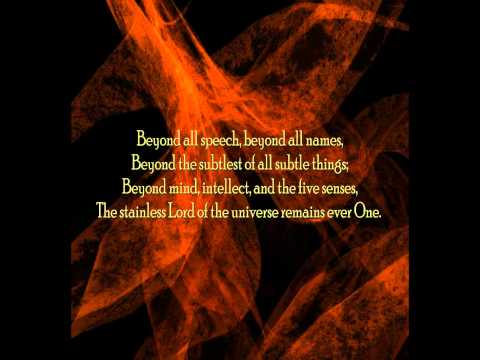
Avadhuta is a Sanskrit term from some Indian religions or Dharmic Traditions referring to a type of mystic or saint who is beyond egoic-consciousness. This 4 1/2 minute video contains “The Song of the Avadhut”. Of all the mystical treatises of ancient Indian literature, the Avadhut Gita, or “Song Of The Avadhut,” is one of the most eloquent and compelling. The Avadhut Gita is a call to knowledge, the supreme knowledge of ultimate Truth. It is the knowledge of the ultimate, indisputable Truth of existence; and it is this very Truth which has the power to make us free. Let’s
[More]
In this wonderful 15 minute audio clip, Alan helps us understand the nature of our true nature. Alan Wilson Watts (6 January 1915 – 16 November 1973) was a British philosopher, writer, and speaker, best known as an interpreter and populariser of Eastern philosophy for a Western audience. Born in Chislehursjt, England, he moved to the United States in 1938 and began Zen training in New York.
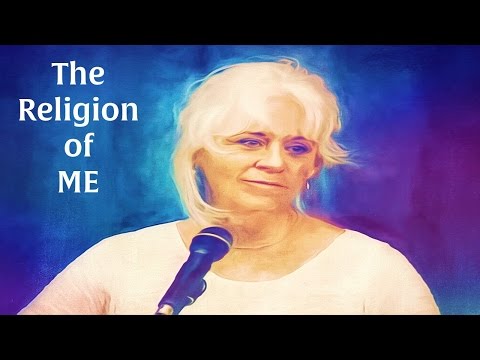
In this wonderful eleven minute video, Gangaji helps us to understand that most of the billions of people living on this planet actually belong to just one religion called “Me”.
Here’s a beautiful little six minute video from a lovely being named Nada who shares with us a great message about how we are all trained from childhood onward to blindly accept what we believe to be our beliefs, our thoughts and our ideas about how to live. This video is an invitation to awaken the source of TRUE insight that lies within ourselves. Let’s listen… Click here for more Nada videos.